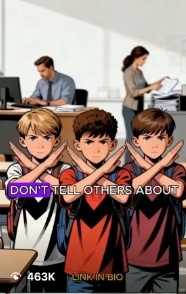
Your child can name the capital of France but freezes when a cashier gives the wrong change. Sound familiar? Schools optimize for test scores — the real world grades on an entirely different curriculum.
After reaching more than 100,000 parents through our Instagram community, one question keeps coming back: "Why does nobody teach kids this stuff?" Here are the ten skills we believe every child needs before their teens — and how to start teaching each one this week.
1. Earning before spending
Most kids receive money (birthdays, allowance) before they ever earn it. Flip the order. A simple chore value contract — where tasks have price tags and both sides sign — teaches that money is created by solving problems for other people. That single idea is the seed of every business instinct.
2. Tracking money they touch
An allowance without a ledger is just cash evaporating. A paper allowance ledger forces the arithmetic: what came in, what went out, what's left, what's the goal. Kids who track money stop asking "can you buy me this?" and start asking "how many car washes is this worth?"
3. Saying no to an adult
We teach kids to obey adults — then wonder why they can't refuse an uncomfortable request. Rehearse "voice shield" phrases at home: "No, I have to ask my parent first." Said aloud ten times in playful roleplay, it becomes a reflex that fires under pressure.
4. Reading a room
Who's in charge here? Who's uncomfortable? Is this group about to do something dumb? Social radar is trainable: at restaurants or parks, quietly ask your child to guess relationships and moods, then compare notes. It's a game — and it builds the pattern-matching that keeps teens out of trouble.
5. Negotiating instead of whining
Whining is a negotiation strategy — a terrible one that works on tired parents. Replace it with a rule: requests come as trades. "If I finish my reading and clean my desk, can I earn 30 extra minutes?" Suddenly you're not fighting; you're doing business. (We wrote a whole guide on teaching kids to negotiate.)
6. Spotting manipulation
Free robux. A stranger who needs help finding his puppy. A "friend" who says real friends would do it. The pattern is identical: an emotional hook plus urgency. Teach the formula, not just the examples — kids who can name the trick don't fall for the next version of it.
7. Handling small emergencies
Locked out. Lost in a store. Smoke alarm at midnight. Panic comes from having no script. Walk through checklists together: stop, breathe, find the designated meeting spot, name three trusted adults. Calm is a rehearsed behavior, not a personality trait.
8. Speaking so adults listen
Eye contact, a firm greeting, a clear ask. A child who can look a coach in the eye and say "Can I show you what I practiced?" has a superpower most adults lack. Practice the "confident hello" ritual every time they meet someone new.
9. Losing without melting down
Board games are cheap resilience training. Play to win, let them lose, and debrief: "What would you try differently?" A kid who can lose a game and re-strategize will later handle a failed test, a missed team selection, a rejected college application.
10. Asking for help early
The most underrated skill on this list. Kids hide problems because they fear the reaction. Fix the incentive: when your child brings you a problem early, the first sentence out of your mouth must be "I'm glad you told me." Every time. That's what keeps the channel open at 8 — and at 15.
Where to start
Don't try all ten at once. Pick the one that made your stomach tighten as you read it — that's the gap. Then build one small system around it this week: a contract, a script, a ledger, a game.
Found this useful? Share it with another parent: